Estándares de portaherramientas BT, CAT, HSK y DIN 6499 comparados: conos, doble contacto, espárragos de tracción y ajuste del husillo. BQUQ mecaniza portaherramientas.
BT vs CAT vs HSK vs DIN 6499: Estándares de Portaherramientas para Fresadoras CNC
BT, CAT y HSK son los estándares que conectan un portaherramientas al husillo CNC, mientras que DIN 6499 regula el extremo de pinza que sujeta la herramienta — y confundir estas dos capas es como los compradores piden portaherramientas que no encajan. BT y CAT son conos de 7:24 de diferentes organismos de estándares, HSK es un cono hueco de 1:10 con doble contacto, y DIN 6499 (ISO 15488) es simplemente la especificación de pinzas ER que reside dentro de todos ellos.
La cuestión de los estándares de portaherramientas tiene dos capas, y la mayor confusión proviene de mezclarlas. Capa uno: la interfaz del husillo — el cono o mango hueco que posiciona el portaherramientas en la máquina. BT, CAT y HSK viven aquí. Capa dos: el extremo de sujeción — el alojamiento que sostiene la herramienta de corte real, más a menudo un alojamiento de pinza ER definido por DIN 6499. Un portaherramientas BT40 con un alojamiento ER32 es una frase con un sujeto de una familia de estándares y un objeto de otra. Esta guía mantiene las capas separadas y mapea las familias.
La Familia de Cono Pronunciado 7:24: BT, CAT y SK
El cono pronunciado es la interfaz de husillo más antigua que sobrevive: un cono de 7:24 (ángulo incluido de aproximadamente 16.6 grados) que se auto-bloquea al acuñarse en el husillo, sostenido por una barra de tracción que tira de un espárrago de tracción o perno de retención. El cono en sí es casi idéntico en BT, CAT y SK — las diferencias están en la brida, el espárrago de tracción y la medición. BT sigue MAS 403 y domina las máquinas construidas en Asia; CAT sigue ASME B5.50 y domina América del Norte; SK (DIN 69871) es el miembro europeo de la familia.
| Propiedad | BT (MAS 403) | CAT (ASME B5.50) | SK (DIN 69871) |
|---|---|---|---|
| Cono | 7:24 | 7:24 | 7:24 |
| Brida | Más grande, existen variantes de doble contacto | Brida en V, muesca para retención | Similar a CAT, disposición DIN |
| Espárrago de tracción | Espárrago específico BT | Espárrago específico CAT | Espárrago DIN 69872 |
| Región | Asia, especificación japonesa | América del Norte | Europa |
| ¿Intercambiables? | No — brida y espárrago diferentes | No — brida y espárrago diferentes | No — brida y espárrago diferentes |
El mensaje más contundente de la tabla es la última fila: se parecen y no son intercambiables. Un portaherramientas CAT40 insertado en un husillo BT40 se asienta en la línea de medición incorrecta o no se asienta en absoluto, y forzarlo daña el cono del husillo. Haga coincidir el portaherramientas con el estándar declarado de la máquina, y haga coincidir el espárrago de tracción con la propia especificación del portaherramientas — los espárragos tampoco son universales.
HSK: La Familia de Mango Hueco
HSK (DIN 69893) reemplaza el cono sólido con un cono hueco, corto de 1:10 que contacta tanto el cono como la cara de la brida — "doble contacto". Cuando la barra de tracción tira del portaherramientas, el mango hueco se flexiona ligeramente y ambas superficies se asientan, dando una conexión más corta y rígida con mejor repetibilidad a alta velocidad. Los tamaños HSK son diámetros de brida en milímetros: HSK-63, HSK-80, HSK-100. Las letras después del número son la variante, y son importantes:
| Variante HSK | Forma | Uso típico |
|---|---|---|
| HSK-A | Cambio automático con ranuras de arrastre y puertos de refrigerante | Centros de mecanizado generales |
| HSK-B | Servicio pesado, brida grande, refrigerante a través | Máquinas más grandes, corte pesado |
| HSK-E | Ligero, simétrico, masa mínima | Alta velocidad, bajo par |
| HSK-F | Muy ligero, alta velocidad | Husillos de ultra alta velocidad |
| HSK-T | Interfaz de torneado | Husillos de torno y torno-fresa |
El doble contacto es la ventaja definitoria de HSK: debido a que la brida se asienta contra la cara del husillo, la posición axial se repite más precisamente que un portaherramientas solo de cono, y la conexión corta y rígida resiste mejor la flexión en la misma proyección. El costo es un husillo más caro y portaherramientas que deben mantenerse limpios — una rebaba en la cara de la brida anula todo el diseño.
DIN 6499: El Extremo de Pinza que Hace la Sujeción
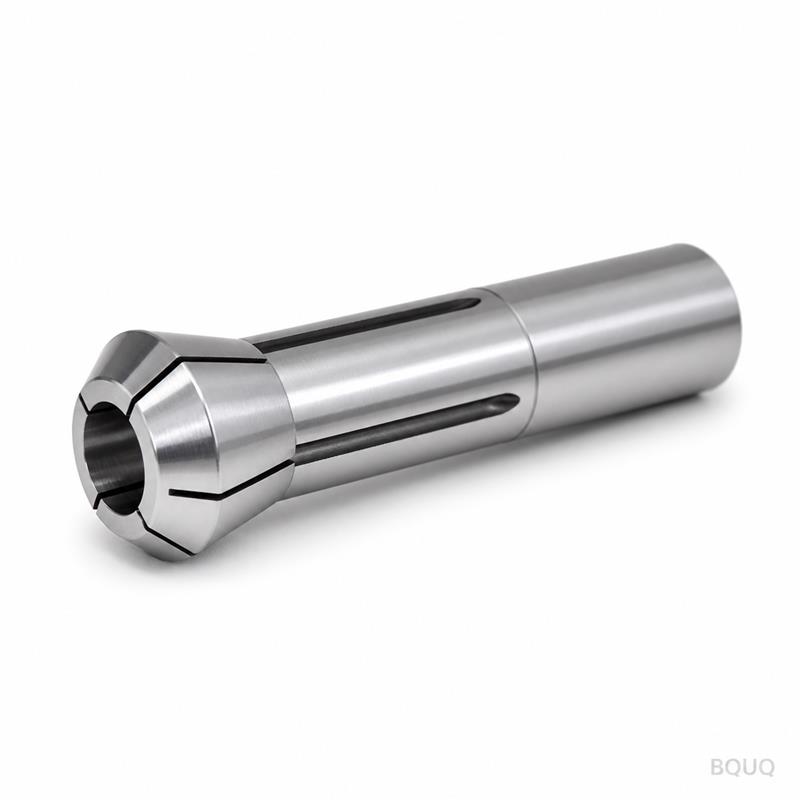
DIN 6499 — ahora ISO 15488 — es la especificación de pinzas ER: el cono de 8 grados, dimensiones de pinza de ER8 a ER50, patrones de ranura y métodos de prueba. No es una interfaz de husillo en absoluto. Es el estándar que hace que un alojamiento ER32 sea el mismo en un portaherramientas BT40, un CAT40 y un HSK-63A, razón por la cual el extremo de sujeción de un portaherramientas rara vez causa problemas de compatibilidad mientras que el extremo del husillo frecuentemente sí. La escalera completa de tamaños y el sistema de grados están cubiertos en nuestra guía de pinzas ER; el punto clave aquí es la convención de nomenclatura en cualquier portaherramientas: BT40-ER32 significa estándar de husillo BT, tamaño 40, con un alojamiento de pinza ER32.
| Estándar de husillo | Estándar de extremo de pinza | Ejemplo típico de portaherramientas de fresadora |
|---|---|---|
| BT (MAS 403) | DIN 6499 (ER) | BT40-ER32 |
| CAT (ASME B5.50) | DIN 6499 (ER) | CAT40-ER32 |
| SK (DIN 69871) | DIN 6499 (ER) | SK40-ER32 |
| HSK (DIN 69893) | DIN 6499 (ER) | HSK-63A-ER32 |
Más allá de ER, los mismos portaherramientas pueden llevar otros sistemas de extremo de herramienta — pinzas TG, alojamientos de contracción, mandriles hidráulicos, o mandriles de pinza directa para fresas — pero ER es el predeterminado en el que la mayoría de los talleres se estandarizan.
Cómo Elegir: Coincidir con el Husillo, Luego con la Operación
La lógica de selección es corta. La interfaz del husillo está decidida por la máquina: lea la especificación de la nariz del husillo y compre ese estándar y tamaño — una adaptación no vale la pena. El extremo de pinza está decidido por la operación: ER para fresado y taladrado general, con el tamaño elegido para que su vástago más grande se asiente en el rango medio del sistema, y el grado de equilibrio elegido para la velocidad máxima (ver nuestra guía de equilibrio de mandriles de pinza). El estilo del portaherramientas — mandril de pinza versus contracción versus hidráulico — es la última decisión, intercambiando conveniencia, descentramiento y costo. Los mandriles de pinza ganan en versatilidad; las compensaciones más profundas están cubiertas en nuestra guía de mandriles de pinza para portaherramientas.
Una regla de compra se aplica a todos los estándares: verifique antes de confiar. Limpie el cono, monte el portaherramientas, indique el calibre o asiento, y verifique el descentramiento con una barra de prueba. Un portaherramientas cuyo estándar es correcto pero cuyo mecanizado es descuidado falla exactamente como un portaherramientas de estándar incorrecto — solo que más lento. Cuando necesite portaherramientas fabricados con la geometría que los estándares asumen — conos verdaderos, alojamientos concéntricos, asientos limpios — BQUQ mecaniza mandriles de pinza para portaherramientas a una clase de 0.005 mm en equipos CNC bajo su techo ISO9001 en Dongguan, junto con líneas suizas y de mandriles de potencia. Envíe su estándar de husillo, tamaños y lista de herramientas a sc@bquq.com para una cotización dentro de 12 horas hábiles.
Preguntas Frecuentes
P: ¿Son intercambiables los portaherramientas BT y CAT?
R: No. Ambos usan el cono de 7:24, pero BT (MAS 403) y CAT (ASME B5.50) difieren en el diseño de la brida, espárragos de tracción y medición. Colocar el incorrecto daña el cono del husillo. Siempre haga coincidir el portaherramientas con el estándar declarado de la máquina.
P: ¿Cuál es la ventaja de HSK sobre los portaherramientas de cono pronunciado?
R: El cono hueco de 1:10 de HSK se asienta tanto en el cono como en la brida (doble contacto), dando una conexión más corta y rígida con posición axial más repetible — valioso a alta velocidad y proyección larga. El costo es un husillo más caro y una limpieza estricta.
P: ¿Qué tiene que ver DIN 6499 con BT y CAT?
R: DIN 6499 (ISO 15488) es el estándar de pinzas ER para el extremo de sujeción del portaherramientas. BT, CAT y HSK describen el extremo del husillo. Un portaherramientas es una combinación — por ejemplo BT40-ER32 — y las dos capas siguen diferentes estándares.
P: ¿Cómo sé qué estándar de portaherramientas necesita mi máquina?
R: Lea la especificación de la nariz del husillo del fabricante de la máquina — declara el estándar, tamaño y espárrago de tracción. En caso de duda, pregunte al proveedor de la máquina antes de comprar cualquier portaherramientas; el cono del husillo es lo único que no puede adaptar económicamente.
P: ¿Puedo usar pinzas ER con portaherramientas HSK?
R: Sí — ER es un estándar de extremo de pinza que se ajusta a cualquier interfaz de husillo. Los portaherramientas HSK se construyen comúnmente con alojamientos ER, y las mismas pinzas ER funcionan en portaherramientas BT, CAT, SK y HSK del mismo tamaño de alojamiento.
Escrito por el Equipo de Ingeniería de BQUQ. BQUQ es una fábrica fuente certificada ISO9001 en Dongguan, China, que opera líneas de mecanizado CNC, estampado de metales, muelles personalizados, disipadores de calor y pinzas bajo un mismo techo. Envíe dibujos a sc@bquq.com o WhatsApp +86 13713157787 para una cotización dentro de 12 horas hábiles. www.bquq.com