Casquillos guía fijos vs deslizantes en tornos tipo suizo: soporte, holgura, desgaste y ajuste. BQUQ mecaniza sistemas de casquillos de pinza suizos en Dongguan.
Casquillos Guía en el Mecanizado Suizo: Fijos vs Deslizantes
Un casquillo guía es la pieza que hace que un torno tipo suizo sea suizo: un manguito de precisión que soporta la barra inmediatamente detrás de las herramientas de corte para que el material esbelto se mecanice con precisión en lugar de desviarse. Las dos arquitecturas — fija, donde el casquillo permanece estacionario y la barra se desliza a través de él, y deslizante, donde el casquillo viaja con el cabezal — intercambian rigidez de soporte por flexibilidad de mecanizado.
Toda máquina suiza tiene uno, y casi ningún taller se pone de acuerdo sobre qué tipo utilizar. Esto se debe a que la respuesta realmente depende del trabajo. Las piezas largas, delgadas y de alto acabado favorecen el soporte rígido de un casquillo fijo; las máquinas que necesitan un recorrido largo del husillo principal o un desbastado más pesado a menudo utilizan un casquillo deslizante. Esta guía explica cómo funciona cada uno, qué dicen los números y cómo elegir sin adivinar.
Qué Hace Realmente el Casquillo
En un torno convencional, el plato sujeta una pieza corta y rígida, y la herramienta corta cerca del agarre. En un torno tipo suizo, el cabezal se desliza, alimentando la barra más allá de la zona de herramientas, y la pieza puede ser muy larga en relación con su diámetro. Sin soporte en el corte, la barra se doblaría lejos de la herramienta y la pieza saldría cónica, ovalada o con vibraciones.
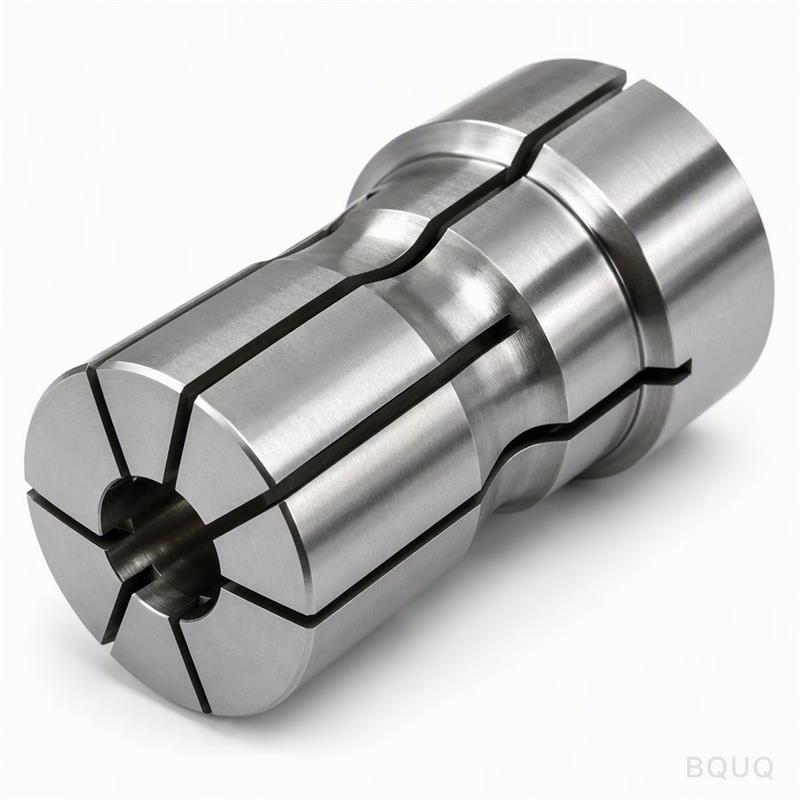
El casquillo guía cierra esa brecha. Está montado justo detrás de las herramientas, su diámetro interior coincide con la barra dentro de unas pocas milésimas de milímetro, y sostiene la barra en el punto exacto donde actúan las fuerzas de corte. La pinza del husillo alimenta y hace girar la barra; el casquillo la posiciona. Ambos deben ser correctos: un plato de pinzas tipo suizo que alimente con precisión y un casquillo que soporte con precisión son las dos mitades de un mismo sistema.
Fijo vs Deslizante: Las Dos Arquitecturas
En una máquina de casquillo fijo, el casquillo está anclado al bastidor de la máquina cerca de la zona de herramientas, y la barra se desliza a través de él mientras el cabezal avanza. Esta es la disposición suiza clásica y la razón por la que el proceso ganó su reputación por las piezas de precisión largas y esbeltas: el punto de soporte nunca se mueve, por lo que la barra se guía en las herramientas en cada pasada.
En una máquina de casquillo deslizante, el casquillo es transportado por el cabezal y viaja con él. Por lo tanto, el punto de soporte se mueve con la barra, lo que cambia lo que la máquina puede hacer: el husillo principal puede mecanizar en un recorrido más largo mientras la barra permanece soportada, y el desbastado más pesado se vuelve práctico porque la barra se mantiene más cerca de donde se aplica la fuerza a lo largo de toda la carrera. El costo es un conjunto de cabezal más complejo y caro, y un casquillo que debe alinearse mientras se mueve.
| Factor | Casquillo fijo | Casquillo deslizante |
|---|---|---|
| Montaje | Anclado al bastidor de la máquina | Transportado por el cabezal |
| Punto de soporte durante el avance | Estacionario en la zona de herramientas | Viaja con la barra |
| Holgura típica de la barra | Ajustada, ~0.003–0.008 mm típico | Más holgada, ~0.01–0.02 mm típico |
| Fortalezas típicas | Piezas esbeltas, acabado fino, redondez | Recorrido largo, cortes pesados, flexibilidad |
| Debilidades típicas | Desgaste del casquillo en una zona | Más piezas para alinear, mayor costo |
| Cambio de serie | Ajustar el casquillo a cada barra | Ajustar el casquillo y verificar la alineación del recorrido |
Los valores de holgura son rangos operativos típicos para barras pequeñas y medianas, no especificaciones fijas; barras más grandes y velocidades más altas aumentan los números. La diferencia arquitectónica es la parte confiable: fijo significa un soporte inmóvil, deslizante significa un soporte que sigue al trabajo.
Elección Según la Geometría de la Pieza y el Proceso
La regla práctica de selección comienza con la relación longitud-diámetro y la severidad del corte. Si la pieza es larga y esbelta — digamos más de 10 veces el diámetro sin soporte — se desea el punto de soporte lo más cerca posible de las herramientas, lo que apunta a la operación con casquillo fijo. Si el trabajo está dominado por el mecanizado del husillo principal en un recorrido largo, o se está desbastando agresivamente y se desea que el cabezal y el casquillo se muevan como una unidad rígida, las máquinas de casquillo deslizante justifican su complejidad.
El material y la construcción del casquillo importan tanto como la arquitectura. El diámetro interior del casquillo sufre el desgaste, por lo que los talleres de producción utilizan casquillos de carburo o carburo con revestimientos reemplazables en series largas, y acero endurecido para series cortas y materiales blandos. El casquillo también debe ajustarse al material medido: un diámetro interior de casquillo fijo que sea 0.005 mm demasiado ajustado se agarrotará en una barra caliente, y uno que esté 0.02 mm holgado permitirá que la barra se flexione.
| Material del casquillo | Vida útil típica | Rol típico |
|---|---|---|
| Acero para herramientas endurecido | Moderada | Series cortas, latón, aluminio, acero blando |
| Carburo de tungsteno sólido | Larga | Series de alto volumen, aleaciones abrasivas |
| Carburo con revestimiento reemplazable | Larga, económica de renovar | Producción de alta mezcla, cambios rápidos de casquillo |
| Partido/ajustable | Depende del material | Ajuste fino de holgura en trabajos de precisión |
La economía es simple: el casquillo es barato en relación con la barra, las herramientas y el husillo. Reemplázalo antes de que marque el material o desvíe la medida, y mantén repuestos para cada barra que utilices regularmente.
Operación y Mantenimiento de Cualquier Tipo
Sea cual sea la arquitectura que utilice tu máquina, tres hábitos mantienen los casquillos en buen estado. Primero, mide el diámetro real de la barra y ordena o rectifica el diámetro interior del casquillo a esa medida — las medidas nominales varían y también las barras. Segundo, mantén el casquillo y la barra limpios y bien lubricados; la viruta arrastrada a través de un diámetro interior ajustado marca ambas superficies en segundos. Tercero, observa las señales: una banda brillante en la barra, un cambio repentino en el acabado o diámetros frontales que se desvían apuntan al desgaste del casquillo antes que a cualquier otra cosa. Nuestra guía de sistemas de pinzas cubre toda la familia de casquillos y la lógica de dimensionamiento, y el artículo sobre descentramiento de pinzas explica cómo los errores de soporte se convierten en errores medidos en la pieza.
Cuando especificas casquillos y pinzas juntos de una sola fuente, la responsabilidad de alineación es más simple: BQUQ mecaniza el trabajo de casquillos guía junto con sus platos de pinzas suizos y pinzas para torno automático con capacidad CNC en la clase de 0.005 mm, por lo que el diámetro interior, el asiento y el cono se fabrican contra la misma referencia. Envía los tamaños de barra y los detalles del casquillo a sc@bquq.com para una cotización dentro de 12 horas hábiles.
Preguntas Frecuentes
P: ¿Casquillo fijo o deslizante — cuál da mejor acabado superficial?
R: Los casquillos fijos generalmente ganan en acabado para piezas esbeltas porque el punto de soporte nunca se mueve y la holgura se puede mantener más ajustada. Las máquinas de casquillo deslizante pueden igualarlo en los trabajos adecuados pero tienen más variables de alineación. El acabado se decide por la configuración de todos modos.
P: ¿Necesito un casquillo diferente para cada tamaño de barra?
R: Sí. El diámetro interior del casquillo debe ajustarse a la barra real — típicamente dentro de unos pocos micrómetros hasta aproximadamente 0.02 mm dependiendo del tipo y diámetro. Usar un casquillo sobredimensionado para ahorrar tiempo de cambio garantiza flexión y mal acabado.
P: ¿Por qué mi barra tiene una banda brillante en un punto?
R: Eso es desgaste por contacto donde el casquillo roza la barra, generalmente por un diámetro interior ajustado, funcionamiento en seco o viruta atrapada entre la barra y el casquillo. Detente y revisa el diámetro interior antes de que la banda se convierta en una marca que dañe cada pieza.
P: ¿Puede una máquina de casquillo fijo hacer trabajo de casquillo deslizante?
R: No en el sentido estricto — el montaje del casquillo está integrado en la arquitectura del cabezal y el bastidor. Puedes cambiar el tipo de casquillo (acero, carburo, revestimiento) y la holgura, pero fijo y deslizante son diseños de máquina, no opciones de casquillo.
P: ¿Con qué frecuencia se debe reemplazar un casquillo guía?
R: No hay un intervalo universal; depende del material, la velocidad y la lubricación. Inspecciona en cada cambio de trabajo y reemplaza cuando el diámetro interior muestre un escalón de desgaste, cuando el acabado se degrade o cuando los diámetros frontales se desvíen — generalmente mucho antes de que el casquillo falle catastróficamente.
Autoría del Equipo de Ingeniería de BQUQ. BQUQ es una fábrica fuente certificada ISO9001 en Dongguan, China, que opera líneas de mecanizado CNC, estampado de metales, muelles personalizados, disipadores de calor y pinzas bajo un mismo techo. Envía planos a sc@bquq.com o WhatsApp +86 13713157787 para una cotización dentro de 12 horas hábiles. www.bquq.com