Los tornos suizos mantienen tolerancias estrictas en piezas pequeñas y largas mediante un buje guía. Descubre cuándo el suizo supera al torno convencional. BQUQ cotiza en 12 horas.
Mecanizado CNC Suizo: Qué Es y Cuándo Realmente lo Necesitas
El mecanizado suizo es la respuesta cuando la pieza es pequeña, larga y con tolerancias estrictas: mantiene la concentricidad y la rectitud en piezas de aproximadamente 0.5 mm a 32 mm de diámetro, con relaciones longitud-diámetro que ningún torno convencional puede manejar. Si tu pieza es un pasador, casquillo, conector o componente de implante de menos de aproximadamente 30 mm de diámetro, el suizo justifica la prima de tarifa; para una brida de 100 mm, es dinero desperdiciado.
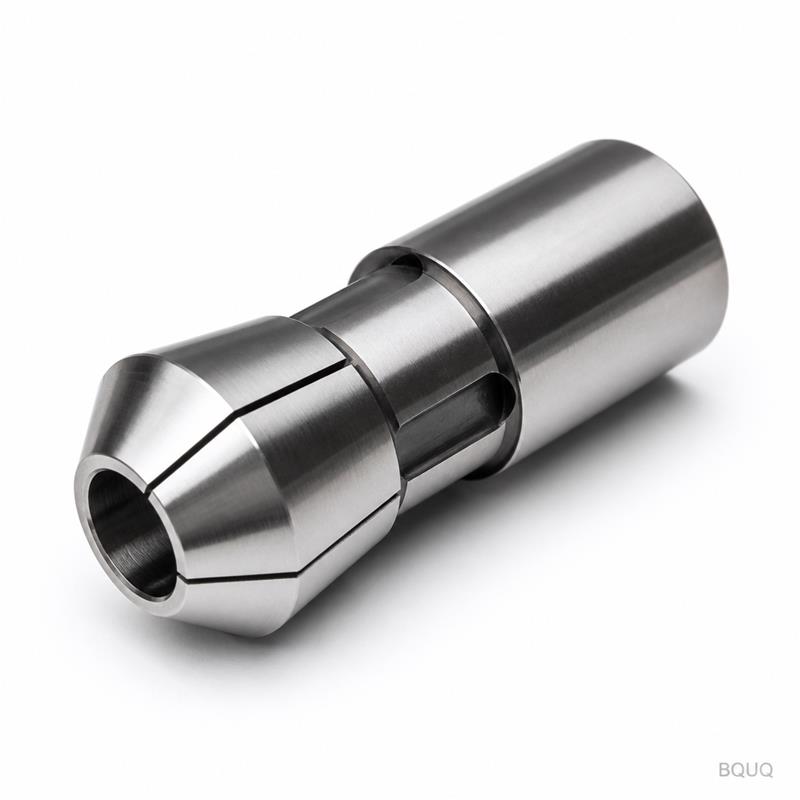
Los tornos CNC de tipo suizo se parecen a los tornos CNC convencionales pero funcionan con un principio diferente. En lugar de que la pieza gire mientras una herramienta se mueve a lo largo de ella, la barra de material se desliza a través de un buje guía mientras las herramientas cortan cerca de ese buje. El corte ocurre justo en el punto de apoyo, por lo que las piezas largas y delgadas no se deforman y la redondez y concentricidad resultan tan buenas como el husillo de la máquina. Esta guía explica cómo funciona el mecanizado suizo, las tolerancias y formas de piezas que realmente domina, y el punto de cruce honesto donde un torno convencional es la herramienta más económica.
Cómo es Diferente un Torno Suizo
En un torno CNC convencional, el mandril sujeta la barra y la pieza se extiende sin soporte en el espacio; mecanizar una característica lejos del mandril significa que la pieza de trabajo se flexiona, y las relaciones longitud-diámetro más allá de aproximadamente 3:1 o 4:1 necesitan un contrapunto o luneta. Un torno suizo invierte la lógica: el cabezal se desliza en el eje Z y empuja la barra a través de un buje guía fijo o deslizante, mientras las herramientas cortan el material justo en la cara del buje. La longitud sin soporte del material en el corte es siempre corta, a menudo menos de unos pocos milímetros, por lo que un eje con relación longitud-diámetro de 20:1 se mecaniza recto, redondo y concéntrico sin vibraciones.
| Factor de mecanizado | Torno CNC convencional | Torno tipo suizo |
|---|---|---|
| Soporte de la pieza de trabajo | Mandril + contrapunto/luneta | Buje guía en el corte |
| Relación L/D práctica | ~3:1 a 4:1 sin soporte | 10:1 a 20:1+ rutinario |
| Rango de diámetro típico | 5 mm a 300 mm+ | ~0.5 mm a 32 mm estándar |
| Concentricidad en piezas largas | Se desvía con la longitud sin soporte | Mantenida en el buje |
| Operaciones múltiples | Generalmente dos o más configuraciones | Una configuración con subhusillo y herramientas vivas |
| Tarifa por hora máquina | Más baja | Más alta |
El precio del enfoque suizo es la máquina en sí: un torno suizo con subhusillo y herramientas vivas es un equipo complejo y costoso, y su área de trabajo es deliberadamente pequeña. Por eso la tecnología se concentra en piezas pequeñas de precisión — médicas, relojería, electrónica, componentes automotrices de combustible y frenos — donde la geometría y las tolerancias justifican la tarifa.
Las Tolerancias que Realmente Ofrece el Mecanizado Suizo
Las máquinas suizas ganan su reputación en características con las que un torno convencional lucha: diámetros largos que deben permanecer redondos y rectos, y características en extremos opuestos de una pieza larga que deben alinearse. Mecanizar cerca del buje guía significa que las fuerzas de corte actúan sobre una sección corta y bien soportada, por lo que la redondez en un diámetro de 3 mm puede mantenerse en el rango de micras bajas y los diámetros comúnmente alcanzan ±0.005 mm o mejor con un control de proceso estable. La concentricidad entre un diámetro torneado y una superficie fresada o un agujero transversal en una pieza larga se mantiene porque el dato de referencia no cambia — la pieza nunca sale del buje.
| Tipo de pieza | Tamaño típico | Por qué el suizo es adecuado |
|---|---|---|
| Componentes de guías médicas | 0.5–3 mm de diámetro | Largas, delgadas, sin rebabas, tolerancia estricta |
| Pasadores de relojería e instrumentos | 1–6 mm de diámetro | Características concéntricas, acabado fino |
| Pasadores de conectores y contactos | 1–8 mm de diámetro | Alto volumen, agujeros transversales, superficies fresadas |
| Partes de válvulas de combustible/freno | 5–20 mm de diámetro | Múltiples diámetros, asientos de sellado |
| Elementos de fijación y piezas de torno automático | 3–25 mm de diámetro | Formas complejas en una sola pasada |
La afirmación de tolerancia debe ser modesta y correcta: el mecanizado suizo mantiene las mismas tolerancias por característica que un buen torneado convencional — ±0.005 mm es realista en diámetros críticos — y las mantiene en geometrías donde un torno convencional ni siquiera puede intentar la pieza. Agujeros transversales, superficies fresadas, ranuras y operaciones de mecanizado trasero se realizan en un solo amarre con un subhusillo, lo que elimina el error de configuración entre operaciones. Para una pieza que necesita dos configuraciones convencionales, el amarre único de la ruta suiza es a menudo la ventaja de tolerancia que importa.
Cuándo No Necesitas Mecanizado Suizo
El suizo no es una tecnología de torneado de propósito general. El buje guía limita el trabajo a barras dentro del área de la máquina, por lo que una brida de 60 mm de diámetro, un eje largo de más de 32 mm o una carcasa grande sujeta con mandril no pueden mecanizarse en una máquina suiza estándar en absoluto. Para esos casos, un torno CNC convencional — a menudo con contrapunto o luneta para soporte — es la herramienta correcta y más económica. La prima de tarifa del suizo solo se justifica cuando la geometría de la pieza realmente explota el buje: diámetro pequeño, alta relación longitud-diámetro o muchas operaciones en una pieza pequeña.
La lógica del punto de cruce refleja lo que escribimos sobre precisión CNC vs repetibilidad: elige el proceso que cumpla la tolerancia con el menor riesgo de configuración, no la máquina más impresionante. Un eje de precisión de 12 mm de diámetro por 80 mm de largo es una pieza suiza. Una polea de 50 mm de diámetro no lo es, y cotizarla en suizo solo añade costo. El volumen también importa — el suizo brilla en piezas pequeñas de alto volumen donde la automatización de la máquina y la alimentación de barras funcionan sin supervisión; para un puñado de prototipos, el costo de configuración domina de cualquier manera.
Qué Enviar Cuando Quieres una Cotización Suiza
El dibujo necesita la misma integridad que cualquier trabajo de torneado, más algunas notas específicas del suizo. Indica el diámetro de la barra y la condición del material — las máquinas suizas trabajan desde barra, por lo que el tamaño del material debe ajustarse al buje guía, y la barra hexagonal o cuadrada necesita el buje correspondiente. Señala explícitamente las tolerancias críticas de concentricidad y descentramiento, porque esas son las características para las que existe el mecanizado suizo. Si la pieza necesita bordes sin rebabas — común en piezas médicas y electrónicas — dilo; las piezas suizas a menudo reciben una pasada de desbarbado o un proceso secundario, y la cotización debe incluirlo honestamente.
También informa al taller la cantidad anual. La configuración suiza es compleja — bujes guía, configuración del alimentador de barras, disposición de herramientas — por lo que el precio por pieza cae bruscamente con el volumen. Un taller que opera torneado de precisión tipo suizo como una línea, no como una novedad, preguntará por el volumen antes de cotizar, porque cambia las elecciones de herramientas y programación. Para una visión completa de cómo se fija el precio del trabajo de piezas pequeñas, nuestra guía de costos de mecanizado CNC detalla la lógica de configuración y tiempo de ciclo línea por línea.
Suizo Versus las Alternativas, Honestamente
Para piezas muy pequeñas y de alto volumen, el suizo compite con tornos automáticos de levas y con máquinas multihusillo; el suizo gana en flexibilidad y cambio rápido, mientras que los automáticos de levas ganan en velocidad bruta a volúmenes enormes. Para piezas en el extremo pequeño con precisión extrema, el suizo es frecuentemente la única ruta práctica. Para todo lo más grande que el área de trabajo, el torneado CNC convencional es la respuesta. La elección está impulsada por la geometría, y el proveedor honesto lo dirá — un piso de componentes de precisión CNC que opera tanto capacidad convencional como suiza puede cotizar el mismo dibujo de ambas maneras y dejar que los números decidan, que es exactamente lo que hacemos en BQUQ antes de recomendar una ruta.
Preguntas Frecuentes
P: ¿Cuál es la diferencia entre un torno suizo y un torno CNC regular?
R: En un torno suizo, la barra se desliza a través de un buje guía mientras las herramientas cortan justo en el buje, por lo que las piezas largas y delgadas permanecen soportadas en el corte. Un torno convencional sujeta el material en un mandril, dejando longitud sin soporte que se desvía más allá de aproximadamente 3:1 a 4:1 de relación longitud-diámetro.
P: ¿Qué tamaños de piezas se mecanizan con suizo?
R: Típicamente barras de 0.5 mm a 32 mm de diámetro, con el punto óptimo por debajo de aproximadamente 20 mm. Las piezas más grandes que el área de la máquina no pueden mecanizarse en suizo en absoluto y pertenecen a un torno convencional.
P: ¿Cuándo debo elegir mecanizado suizo sobre torneado CNC convencional?
R: Cuando la pieza es pequeña, larga (relación longitud-diámetro superior a aproximadamente 4:1), necesita concentricidad estricta entre características de extremos, o combina torneado con fresado y agujeros transversales en un solo amarre. De lo contrario, un torno convencional es más económico para la misma tolerancia.
P: ¿Qué tolerancias puede mantener el mecanizado suizo?
R: Los diámetros críticos comúnmente mantienen ±0.005 mm o mejor con un control de proceso estable, y la redondez en diámetros pequeños bien soportados está en el rango de micras bajas. La mayor ventaja es mantener esas tolerancias en piezas largas y delgadas que un torno convencional no puede soportar.
P: ¿Cuesta más el mecanizado suizo que el torneado convencional?
R: Sí — las máquinas suizas tienen tarifas por hora más altas y una configuración más compleja. La prima se compensa con menos configuraciones, menos desperdicio en piezas delgadas y operación de alto volumen sin supervisión. Para piezas grandes y simples, el torno convencional es la respuesta más económica y correcta.
Escrito por el Equipo de Ingeniería de BQUQ. BQUQ es una fábrica fuente certificada ISO9001 en Dongguan, China, que opera líneas de mecanizado CNC, estampado de metales, muelles personalizados, disipadores de calor y pinzas bajo un mismo techo. Envía dibujos a sc@bquq.com o WhatsApp +86 13713157787 para una cotización dentro de 12 horas hábiles. www.bquq.com