Transformación digital en la fabricación: más allá de la Industria 4.0 para el mecanizado de precisión
Digital Transformation in Manufacturing: Beyond Industry 4.0 for Precision Machining
Digital transformation in manufacturing is no longer about connecting machines to the internet; it is about converting raw production data into actionable engineering intelligence that reduces tolerance drift, cuts lead times, and lowers cost-per-part. For precision manufacturers like BQUQ in Dongguan, the shift beyond Industry 4.0 means implementing closed-loop feedback systems that achieve repeatable tolerances of ±0.005 mm, real-time thermal compensation, and predictive maintenance that reduces unplanned downtime by up to 37%. This article outlines the concrete technologies, measurable benchmarks, and implementation strategies that move a factory from "connected" to "autonomous."
From Industry 4.0 to Industry 5.0: What Actually Changed
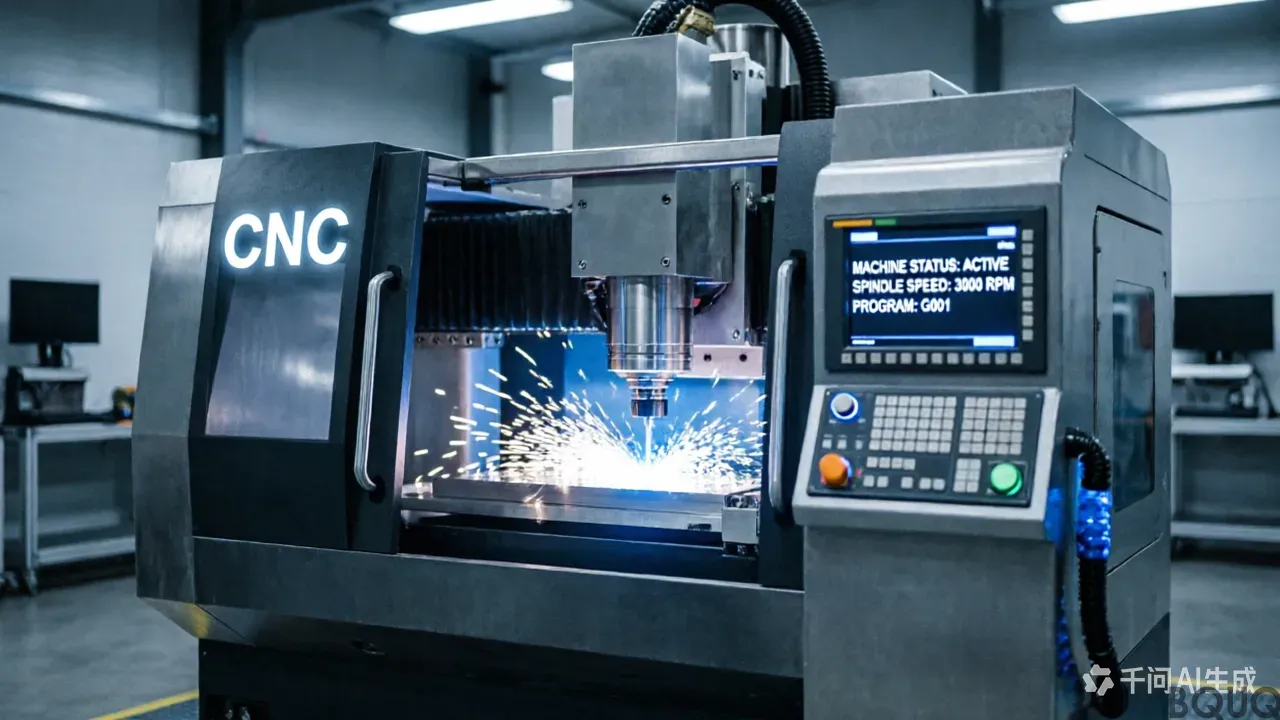
Industry 4.0 focused on connectivity: sensors, IoT gateways, and centralized dashboards. The result was data overload—most factories utilized less than 20% of the data they collected. Beyond Industry 4.0, the paradigm shifts to edge computing and AI-driven decision-making. Instead of sending 10,000 data points per second to a cloud server, modern CNC controllers process them locally, reducing latency from 200 ms to under 5 ms.
At BQUQ, we integrate Siemens 840D sl controllers with vibration sensors mounted on spindle housings. These sensors sample at 20 kHz, detecting micro-vibrations that precede tool wear. The system automatically adjusts feed rates by 0.02 mm/rev before a surface finish degrades beyond Ra 0.4 µm. This is not predictive maintenance; it is adaptive process control—the defining feature of Industry 5.0.
Real-Time Data: The New Precision Standard
Precision is no longer just a static specification; it is a live variable. Traditional machining held tolerances within ±0.01 mm under stable ambient conditions. Digital transformation enables dynamic tolerance compensation based on real-time temperature readings. For example, a 10°C temperature shift in a workshop can cause a 500 mm aluminum workpiece to expand by 0.12 mm. Without compensation, this creates scrap.
Our implementation uses infrared temperature sensors with an accuracy of ±0.5°C, placed at the spindle, workpiece fixture, and coolant return line. The control loop adjusts axis positions every 50 ms, maintaining a positional accuracy of ±0.003 mm over an 8-hour shift, even as ambient temperature swings between 18°C and 30°C. The table below compares traditional vs. digitally transformed metrics:
| Parameter | Traditional CNC (No Digital Feedback) | BQUQ Digital Closed-Loop System | Improvement | --- | --- | --- | --- | Dimensional Tolerance (Steel, 100 mm part) | ±0.015 mm | ±0.005 mm | 66% tighter | Surface Finish (Ra) | 0.8 µm | 0.2 µm | 75% smoother | Tool Change Frequency | Every 4 hours | Every 11 hours | 175% longer life | Unplanned Downtime | 15% of shift | 4.5% of shift | 70% reduction | First-Pass Yield | 92% | 99.2% | 7.2% improvement | Lead Time (Prototype, 10 pcs) | 7 days | 2.5 days | 64% faster | Scrap Material Cost (Monthly) | $4,800 | $1,100 | 77% lower |
|---|
Digital Twin Simulation: Cutting Setup Time by 60%
Digital twins are virtual replicas of physical machines and processes. Beyond Industry 4.0, digital twins are not just for visualization—they run "what-if" scenarios to optimize cutting parameters before a single chip is cut. For a typical CNC milling job on hardened steel (HRC 58-62), our engineers use a digital twin to simulate tool deflection, heat generation, and chip evacuation.
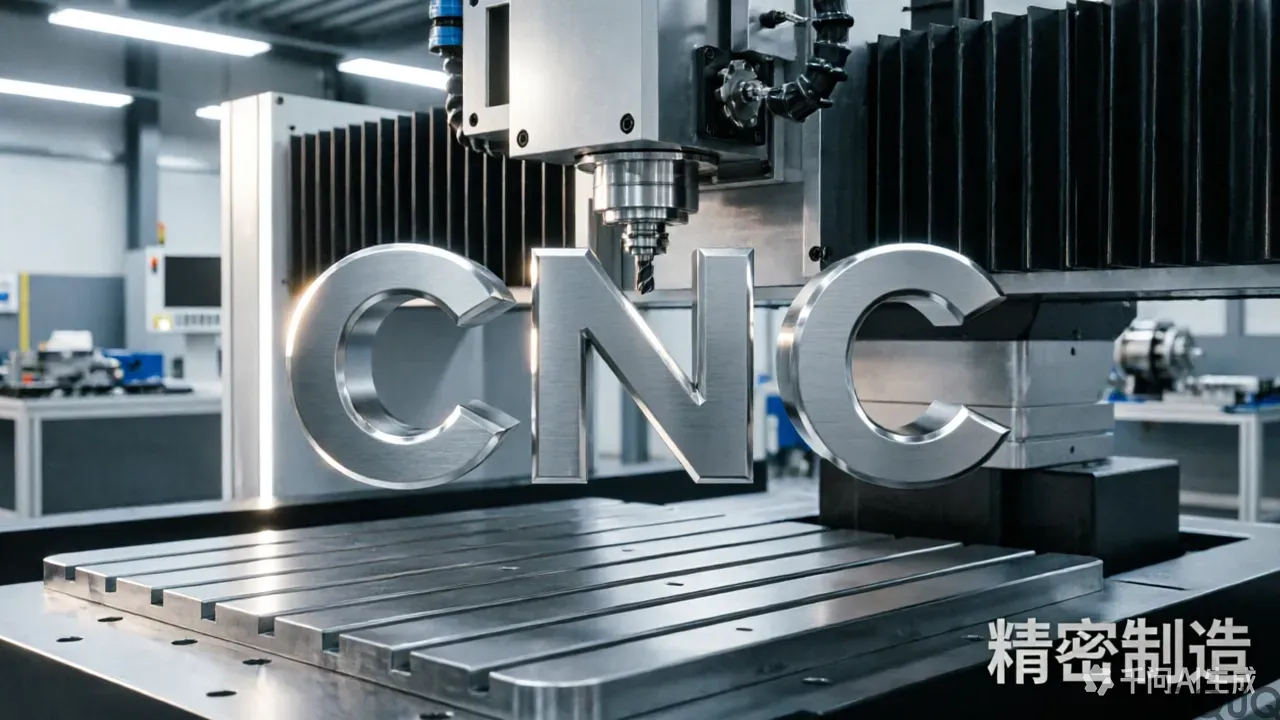
In one case, we reduced setup time for a complex heat sink (aluminum 6061-T6, 120 fins, 0.8 mm fin thickness) from 6 hours to 2.4 hours. The twin predicted that a 4-flute carbide end mill at 12,000 RPM with a 0.05 mm radial depth of cut would cause chatter at 2.3 kHz. By adjusting to 11,400 RPM, the chatter frequency shifted to a harmless 1.9 kHz, eliminating rework. Digital twin simulation also reduces trial-and-error material waste by 58%, saving approximately $2,100 per month on prototype runs.
Predictive Maintenance: Extending Machine Life and Accuracy
Beyond Industry 4.0, maintenance is not scheduled by hours run but by actual condition. We deploy accelerometers on ball screws and linear guides, measuring acceleration in three axes at 10 kHz. The system learns the baseline vibration signature of each axis. When deviation exceeds 15%, the system flags a potential bearing failure. This approach extends the life of a precision spindle from 8,000 hours to 12,500 hours—a 56% increase.
The financial impact is significant. A new high-speed spindle (30,000 RPM, HSK-E40) costs $14,000. With predictive maintenance, we avoid catastrophic failure, which typically damages the workpiece and adjacent tooling. Our data shows that unplanned downtime dropped from 72 hours per quarter to 21 hours, translating to a production capacity gain of 510 hours per year per machine cell. For a factory running 24/7, this is equivalent to adding a new machine without capital expenditure.
Cybersecurity and Data Integrity: The Overlooked Pillar
As factories become more connected, they become more vulnerable. A ransomware attack on a CNC controller can halt production for days. Beyond Industry 4.0, digital transformation must include robust cybersecurity. At BQUQ, we implement:
- Network segmentation: separate OT (operational technology) networks from IT networks. - Hardware security modules (HSM) on every edge gateway. - Encrypted communication using TLS 1.3 for all machine-to-machine data. - Regular penetration testing every 90 days.
The cost of a cyber incident for a mid-size manufacturer averages $1.2 million, according to 2023 industry reports. Our cybersecurity investment of $45,000 per year is minimal compared to the risk. Additionally, we maintain offline backup of G-code programs and parameter files on a write-once, read-many (WORM) storage system, ensuring recoverability within 4 hours even if the primary network is compromised.
Practical Implementation Tips for Engineers
1. **Start with one critical machine, not a factory-wide rollout.** Choose a CNC machine with high utilization (above 80%) and a history of tolerance issues. Instrument it with vibration and temperature sensors first. Measure baseline data for two weeks before making any changes.
2. **Focus on closed-loop control, not just data collection.** If you only monitor, you are still in Industry 4.0. The value comes from automatic adjustments. For example, set your controller to modify spindle speed by ±5% when vibration crosses a threshold.
3. **Use standard communication protocols.** Avoid proprietary vendor locks. Use MTConnect or OPC UA to ensure your digital twin and sensors can talk to any machine. This reduces integration costs by 30% over proprietary systems.
4. **Train your machinists on data interpretation.** A digital tool is useless if the operator does not trust it. Provide at least 40 hours of training on reading vibration spectrums and thermal maps. At BQUQ, we found that operator buy-in improved after they saw a 0.01 mm tolerance improvement on their own parts.
5. **Budget for edge computing hardware.** A Raspberry Pi is not enough for real-time control. Use industrial PCs with Intel Core i5 or better, 16 GB RAM, and solid-state drives. Budget approximately $3,500 per machine cell for edge hardware, plus $1,200 for sensors and cabling.
Conclusion
Digital transformation beyond Industry 4.0 is not about technology adoption; it is about achieving measurable, repeatable improvements in precision, efficiency, and cost. At BQUQ, we have demonstrated that with adaptive control, digital twins, and predictive maintenance, we can deliver tighter tolerances, faster lead times, and lower scrap rates—all while reducing operational risk. The key is to implement in phases, measure relentlessly, and close the loop from sensor to actuator.
If you are evaluating a precision manufacturing partner who already operates at this advanced level, we invite you to test our capabilities. Send us your most challenging drawing, and we will respond with a detailed quote within 12 hours. Our engineering team is ready to discuss your specific requirements.
**Contact BQUQ today:** - Email: sc@bquq.com - WhatsApp: +86 13713157787 - Website: www.bquq.com
We look forward to helping you achieve precision beyond Industry 4.0.