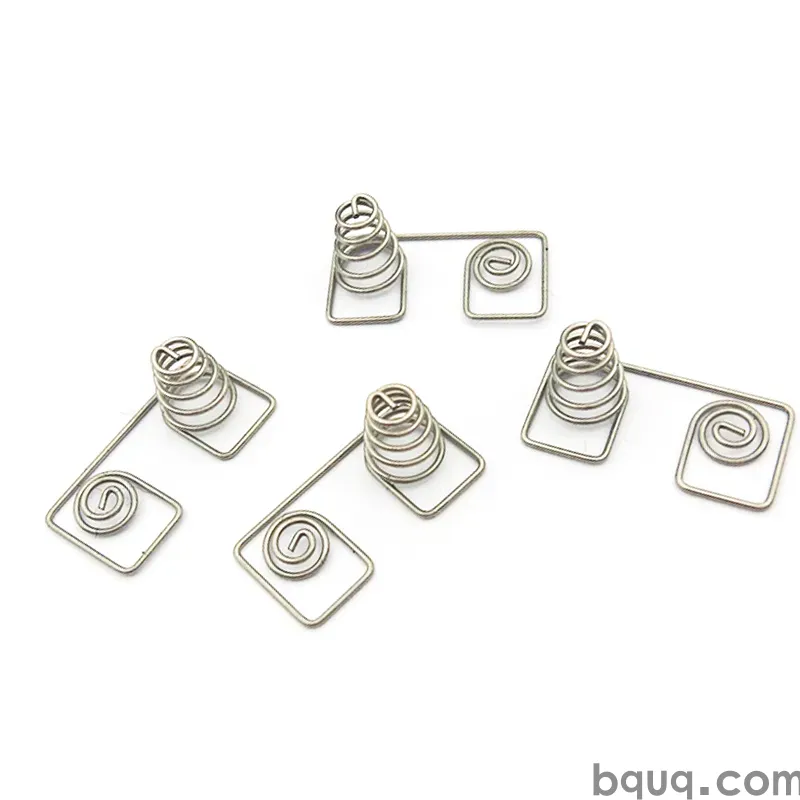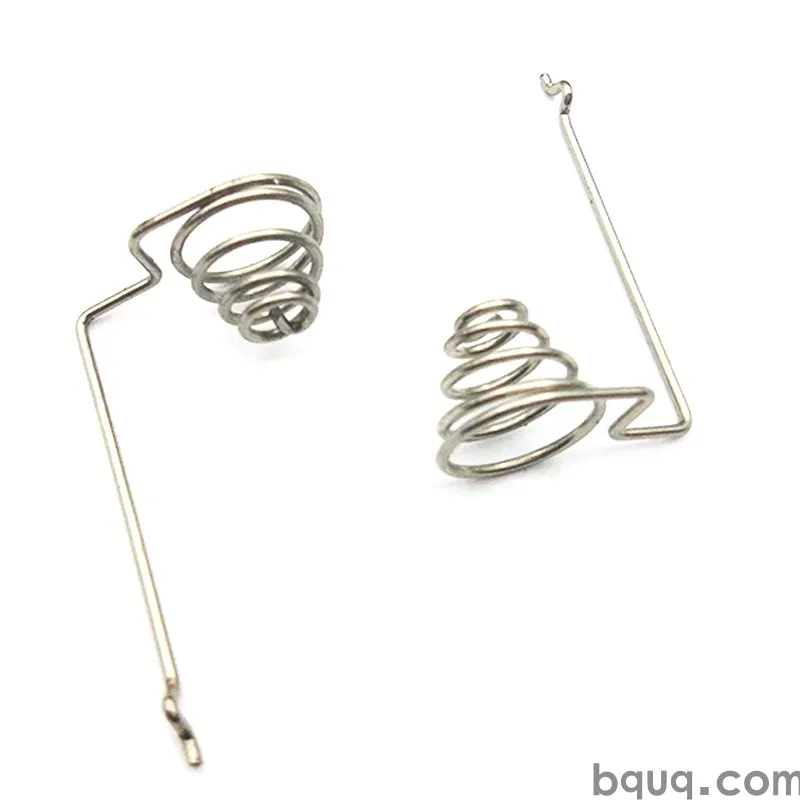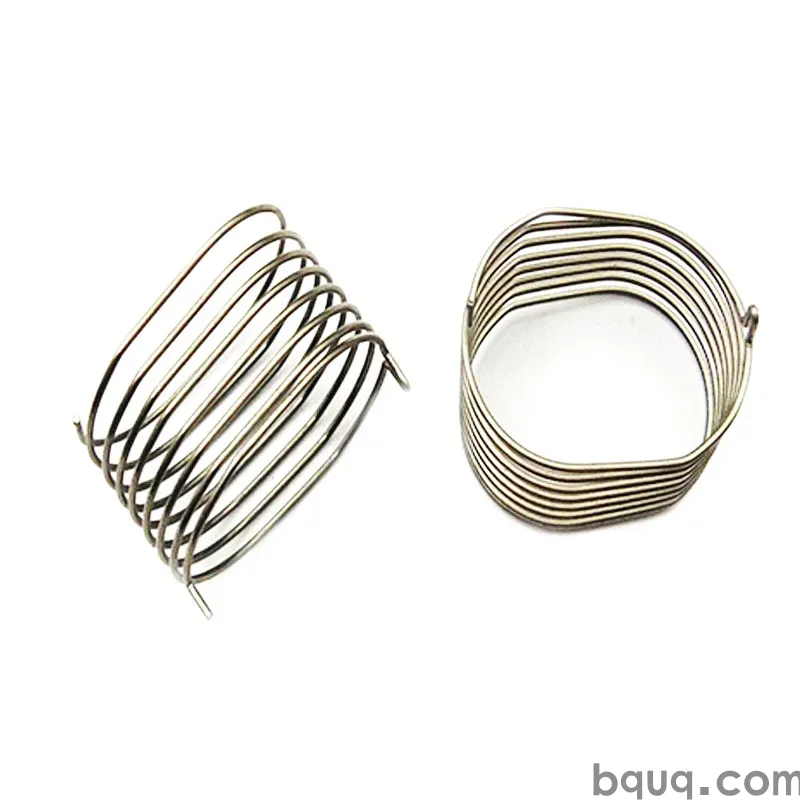
El alambre musical falla por encima de 120C. Descubra qué aleaciones para muelles mantienen la carga por encima de 200C y cómo las clasifica BQUQ (ISO9001, Dongguan). Cotizaciones en 12 horas.
Muelles de Alta Temperatura: Materiales que Mantienen la Carga por Encima de 200°C
Por encima de 200°C, el acero para muelles ordinario deja de comportarse como un muelle: el alambre musical pierde carga a partir de unos 120°C, los grados de acero templado al aceite y cromo-silicio agotan su margen alrededor de los 220°C, y solo las familias de acero inoxidable y níquel siguen funcionando hasta 300–600°C. Si su muelle debe mantener la carga continuamente por encima de 200°C, elija entre acero inoxidable 302, 17-7PH, Inconel X-750 o Nimonic 90 — y diseñe teniendo en cuenta la relajación, no solo la resistencia.
Un muelle es un componente que almacena energía mecánica, y el calor es el enemigo de la energía almacenada. Al elevar la temperatura, ocurren dos cosas a la vez: el material fluye (creep) bajo tensión sostenida, y el módulo de cizalladura disminuye, por lo que la misma geometría produce menos fuerza. La pregunta de ingeniería no es "¿se fundirá?" sino "¿seguirá manteniendo su carga nominal después de 1.000 o 10.000 horas a temperatura?". Esa pregunta se responde con la selección del material y algunas reglas de diseño que importan más que el propio grado de la aleación.
Qué Ocurre Realmente con un Muelle por Encima de 200°C
El fallo dominante por encima de 150°C es la relajación de tensiones: la carga disminuye con el tiempo aunque el muelle nunca se mueva mucho. Es creep disfrazado. Un muelle mantenido a una longitud comprimida fija pierde fuerza lentamente porque el flujo micro-plástico redistribuye la tensión. La pérdida puede alcanzar el 20–40% de la carga inicial en las primeras cientos de horas a alta temperatura, y luego se ralentiza. La fatiga es secundaria en la mayoría de las aplicaciones calientes porque las piezas ciclan lentamente; la relajación es lo que mata silenciosamente a un muelle caliente.
La oxidación es el segundo problema. El acero al carbono se descama y pica por encima de aproximadamente 200°C, y cada picadura es un concentrador de tensiones. Los aceros inoxidables y las aleaciones de níquel forman un óxido protector que les permite funcionar en caliente durante años. La caída del módulo importa para el cálculo: a 300°C, el módulo de cizalladura del acero inoxidable es aproximadamente un 10–15% menor que a temperatura ambiente, por lo que un muelle diseñado para 20 N a 20°C puede entregar solo 17–18 N a temperatura, incluso antes de que comience la relajación. Los muelles de compresión solicitados para servicio en caliente deben diseñarse y medirse a la temperatura de operación, no a 20°C.
Materiales para Muelles Clasificados por Temperatura de Servicio Continuo
La siguiente tabla enumera las aleaciones que una fábrica de muelles realmente bobina, con los límites típicos de servicio continuo. Estas son pautas de ingeniería, no absolutos de hoja de datos — el límite real depende del nivel de tensión, el número de ciclos y el entorno.
| Material | Temperatura máx. de servicio continuo | Tensión de diseño máx. típica a temperatura | Resistencia a la corrosión | Costo relativo |
|---|---|---|---|---|
| Alambre musical (EN 10270-1) | ~120°C | Baja; se relaja rápido por encima de 80°C | Pobre | 1.0× |
| Cromo-silicio templado al aceite | ~220°C | Moderada, solo a corto plazo | Pobre | 1.2–1.5× |
| Cromo-vanadio | ~210°C | Moderada | Pobre | 1.2–1.5× |
| Inoxidable 302/304 (EN 10270-3) | ~290°C | Buena hasta ~260°C | Buena | 2–3× |
| Inoxidable 17-7PH | ~370°C | Buena hasta ~350°C | Buena | 4–6× |
| Inconel X-750 | ~600°C | Buena hasta ~550°C | Excelente | 8–12× |
| Nimonic 90 | ~550–650°C | Buena hasta ~600°C, excursiones cortas más altas | Excelente | 10–15× |
Conclusión: la escalera de precios es empinada. Un muelle de acero inoxidable 302 cuesta de dos a tres veces más que uno de alambre musical, y un muelle de Inconel X-750 puede costar diez veces más. No salte a las aleaciones de níquel a 220°C donde el inoxidable 302 todavía funciona bien — la mayor parte del costo compra margen de temperatura que nunca usará. Si el entorno también es corrosivo (vapor, sal, ácidos), suba en la familia de los inoxidables incluso a temperaturas moderadas, porque la resistencia a la oxidación y la resistencia a la corrosión se compran juntas.
La Matriz de Selección: Adapte el Material a la Ventana de Operación
Use la ventana de aplicación — temperatura más entorno — para preseleccionar, y luego verifique con una prueba de relajación en una muestra.
| Condición de operación | Material recomendado | Por qué |
|---|---|---|
| Por debajo de 120°C, interior seco | Alambre musical | Más barato, mayor resistencia por costo |
| 120–220°C, seco, ciclos bajos | Cromo-silicio o inoxidable 302 | Equilibrio entre costo y resistencia a la relajación |
| 200–350°C, seco o ligeramente corrosivo | 17-7PH | Mantiene mejor la tensión en esta banda |
| 350–600°C, escape, turbina, horno | Inconel X-750 | Probado en hardware de turbinas de gas y escapes |
| Cualquier temperatura, sal/humedad/corrosivo | Inoxidable 302/316, o 17-7PH recubierto | La corrosión impulsa la elección, no solo el calor |
Para servicio en caliente por encima de 350°C, espere pagar por las pruebas: las muestras de relajación deben comprimirse a la longitud de trabajo y mantenerse a la temperatura de trabajo durante 100–1.000 horas, y luego medirse. Una fábrica que cotiza un muelle de Inconel sin preguntar por las horas-a-temperatura y el nivel de tensión está cotizando a ciegas. Nuestra línea de muelles personalizados trata cada aplicación caliente como un problema de relajación primero — envíe la temperatura, la carga, la longitud de trabajo y la vida útil requerida, y dimensionaremos la aleación y el nivel de tensión juntos.
Reglas de Diseño que Importan Más que la Aleación
Cuatro reglas hacen más por la vida de un muelle caliente que cualquier cambio de grado. Primero, reduzca la tensión de operación: a temperatura, diseñe aproximadamente al 60–70% de la tensión admisible a temperatura ambiente, porque la relajación escala fuertemente con la tensión — una reducción del 20% en la tensión puede multiplicar la vida varias veces. Segundo, especifique el asentamiento (también llamado eliminación de asentamiento): comprima el muelle a bloque en frío antes de su uso para que el mayor asentamiento plástico ocurra en la fábrica, no en su equipo. Tercero, añada un paso de alivio de tensiones o estabilización térmica después del bobinado — aproximadamente 30 minutos a una temperatura cercana a la de servicio, realizado por el fabricante del muelle, estabiliza la microestructura y las dimensiones. Cuarto, nunca confíe en un solo cambio de material sin una verificación de relajación versus fatiga: un muelle caliente que cicla rápidamente necesita tanto control de relajación como granallado para la fatiga, mientras que un muelle caliente que permanece estático solo necesita control de relajación.
Ejemplo práctico: un muelle de válvula que opera a 230°C, 15 N en altura de trabajo, necesitando 10.000 horas de servicio. En inoxidable 302, mantenga la tensión de operación cerca del 40–45% de la resistencia a la tracción y asiente el muelle a bloque; la relajación medida después de 1.000 horas a temperatura típicamente resulta en una pérdida de carga del 5–10%, dentro de una ventana de ±10%. El mismo muelle en cromo-silicio a 230°C puede perder un 15–25% en el mismo período, porque la resistencia a la relajación de esa aleación se agota cerca de su límite. Por eso la tabla de materiales debe leerse junto con la columna de tensión: a 230°C, el inoxidable 302 es la respuesta de ingeniería y el cromo-silicio es la falsa economía.
BQUQ opera producción de muelles personalizados bajo ISO9001 en Dongguan, en líneas de compresión, extensión, torsión y muelles compuestos, con mecanizado CNC y estampado en la misma fábrica para las carcasas y contactos alrededor de su muelle. Los pedidos de servicio en caliente se cotizan a partir del dibujo más sus datos de temperatura y vida útil, no de una nota vaga de "alta temperatura" — envíe los números a sc@bquq.com o WhatsApp +86 13713157787 y recibirá una cotización dentro de 12 horas hábiles.
P: ¿Cuál es el material para muelles más barato que funciona a 200°C?
El cromo-silicio templado al aceite o el cromo-vanadio son las opciones de bajo costo, utilizables hasta aproximadamente 200–220°C con tensión reducida. Por encima de eso, cambie a inoxidable 302. El material más barato que funciona es aquel cuya relajación a su nivel de tensión permanece dentro de su tolerancia de carga.
P: ¿Por qué mi muelle de acero inoxidable pierde fuerza aunque se ve bien?
Es relajación, no corrosión. El muelle ha fluido: el flujo micro-plástico bajo tensión sostenida ha acortado permanentemente la longitud libre o ha reducido la carga en la altura de trabajo. Solución: asentamiento, menor tensión, o una aleación de mayor grado como 17-7PH.
P: ¿Puede el Inconel X-750 reemplazar un muelle de acero inoxidable sin rediseñar?
No. El Inconel tiene un módulo de cizalladura más bajo y una resistencia diferente, por lo que la misma geometría da una constante elástica diferente. Rediseñe el diámetro del alambre y el número de espiras, y vuelva a verificar la constante a la temperatura de operación. Cambiar la aleación sin recalcular es el error más común en muelles calientes.
P: ¿Cómo verifico que un muelle mantendrá la carga a 250°C?
Realice una prueba de relajación: mantenga muestras de producción a la longitud y temperatura de trabajo durante las horas objetivo, y luego mida la pérdida de carga. Pida a la fábrica una curva de tiempo versus carga. Una pérdida del 5–10% dentro de la tolerancia es normal; un 20% o más significa que el nivel de tensión es demasiado alto para la aleación.
P: ¿BQUQ realiza tratamiento térmico y pruebas de muelles de alta temperatura internamente?
Los muelles se bobinan, estabilizan térmicamente y se prueban bajo carga en nuestra línea de muelles ISO9001. La prueba de relajación a temperatura se organiza en el lote de muestras, y cada lote de producción se envía con datos de inspección dimensional y de carga.
Autoría del Equipo de Ingeniería de BQUQ. BQUQ es una fábrica fuente certificada ISO9001 en Dongguan, China, que opera mecanizado CNC, estampado de metales, muelles personalizados, disipadores de calor y líneas de pinzas bajo un mismo techo. Envíe dibujos a sc@bquq.com o WhatsApp +86 13713157787 para una cotización dentro de 12 horas hábiles. www.bquq.com